
Belfast Has the Hockey. Now What?
 The Friendship Four has brought elite American college hockey, international connections and community opportunities to Belfast since 2015. As the tournament returns in November, is it time we looked beyond the final score and considered what comes next?
Hockey talks a lot about growing the game.
We bang on about attracting new supporters and developing young talent while making the sport visible beyond its existing audience. But creating those opportunities isn’t always easy.
Belfast has spent more than a decade building an event that gives us a reason to examine that challenge.
The Friendship Four returns to The O2 Belfast on 27 and 28 November 2026. Four NCAA Division I programmes the University of Connecticut, Providence College, the University of Minnesota Duluth and Colgate University will all compete for the Belpot Trophy.
For the Belfast Giants and Elite Ice Hockey League supporters, two days of hockey might sound straightforward get to the rink, enjoy the atmosphere and see who lifts the trophy.
There is nothing wrong with that. But the Friendship Four has always been bigger than the action on the ice. With over a decade of history, deep community roots, and that unmistakable US college atmosphere, it’s an event that deserves a much closer look.
 A tournament that dared to be different
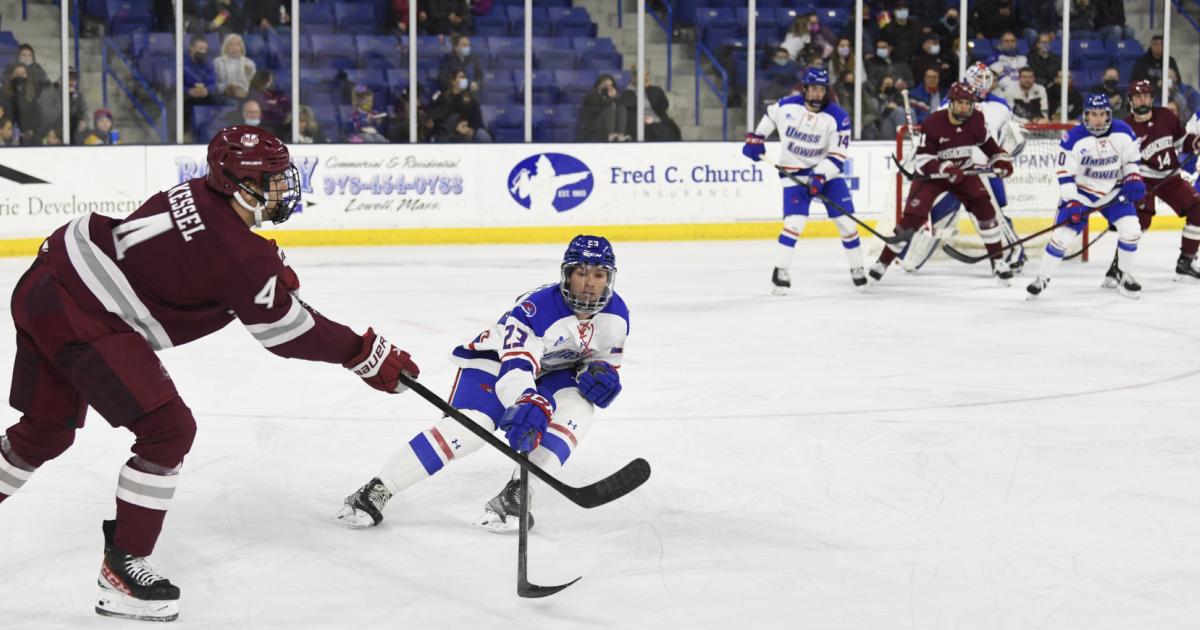
When the Friendship Four launched in 2015, it was not simply another tournament added to the hockey calendar.
Founded by The Odyssey Trust, the event grew out of the sister-city relationship between Belfast and Boston. Its ambition was to bring elite American university hockey to Northern Ireland while building educational, cultural and community connections across the Atlantic.
The inaugural tournament featured UMass Lowell, Northeastern University, Brown University and Colgate University. It also made history as the first NCAA Division I men’s ice hockey tournament staged outside North America.
That was a massive achievement for a city whose hockey identity had been shaped entirely by the Belfast Giants and their supporters.
The tournament offered something that another weekend of domestic fixtures could not: a different level of international hockey and a unique cultural experience. It also gave visiting universities an opportunity to experience Northern Ireland beyond the rink.
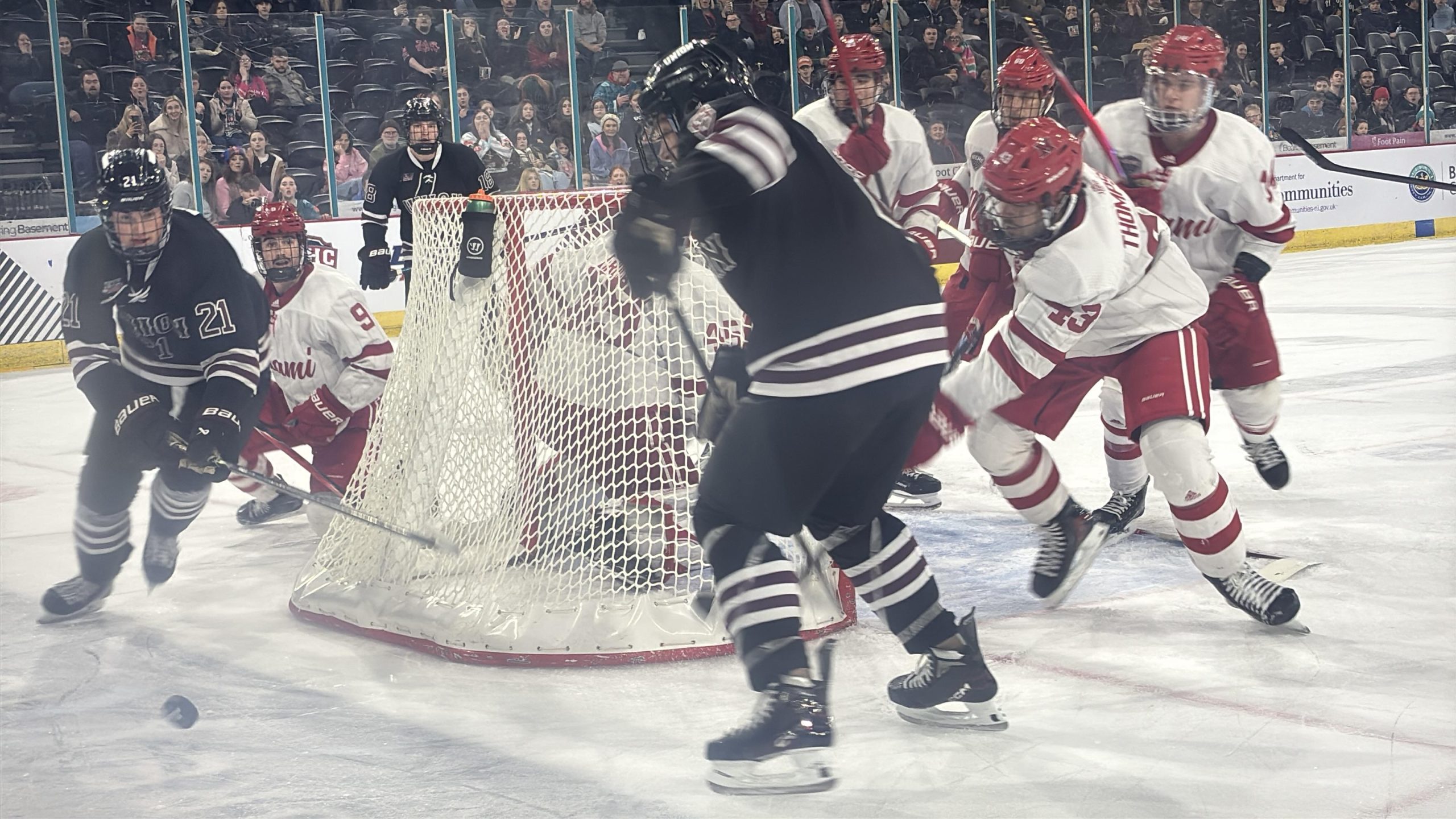
By 2025, the Friendship Four had reached its tenth-anniversary edition, with Miami University claiming the Belpot Trophy after a decade of high-level competition.
Eleven years after its launch, the tournament is a staple of Belfast’s sporting calendar. That’s a massive win but it also leaves us wondering, once you’ve built something this unique, where do you take it next?
The work begins before the puck drops
The Friendship Four’s impact has never been intended to begin and end at the arena doors.
The inaugural event was accompanied by a month-long STEM programme at W5 that attracted 2,776 participants. In subsequent years, the wider programme has continued to connect the tournament with educational opportunities and local communities.
In 2025, hundreds of schoolchildren took part in the annual Big STEM Day at W5, with activities linking science, discovery and sport. Visiting teams have also met local primary school pupils through question-and-answer sessions and hockey-related games.
For an established supporter, hockey may already be part of everyday life. You know the rules and have your own reasons for following a team.
For a child who has never watched a game, that first encounter can be very different. Meeting a university athlete, discovering how sport connects with science or seeing hockey played at that relentless NCAA pace can completely blow a kid’s mind and spark an interest that wasn’t there before.
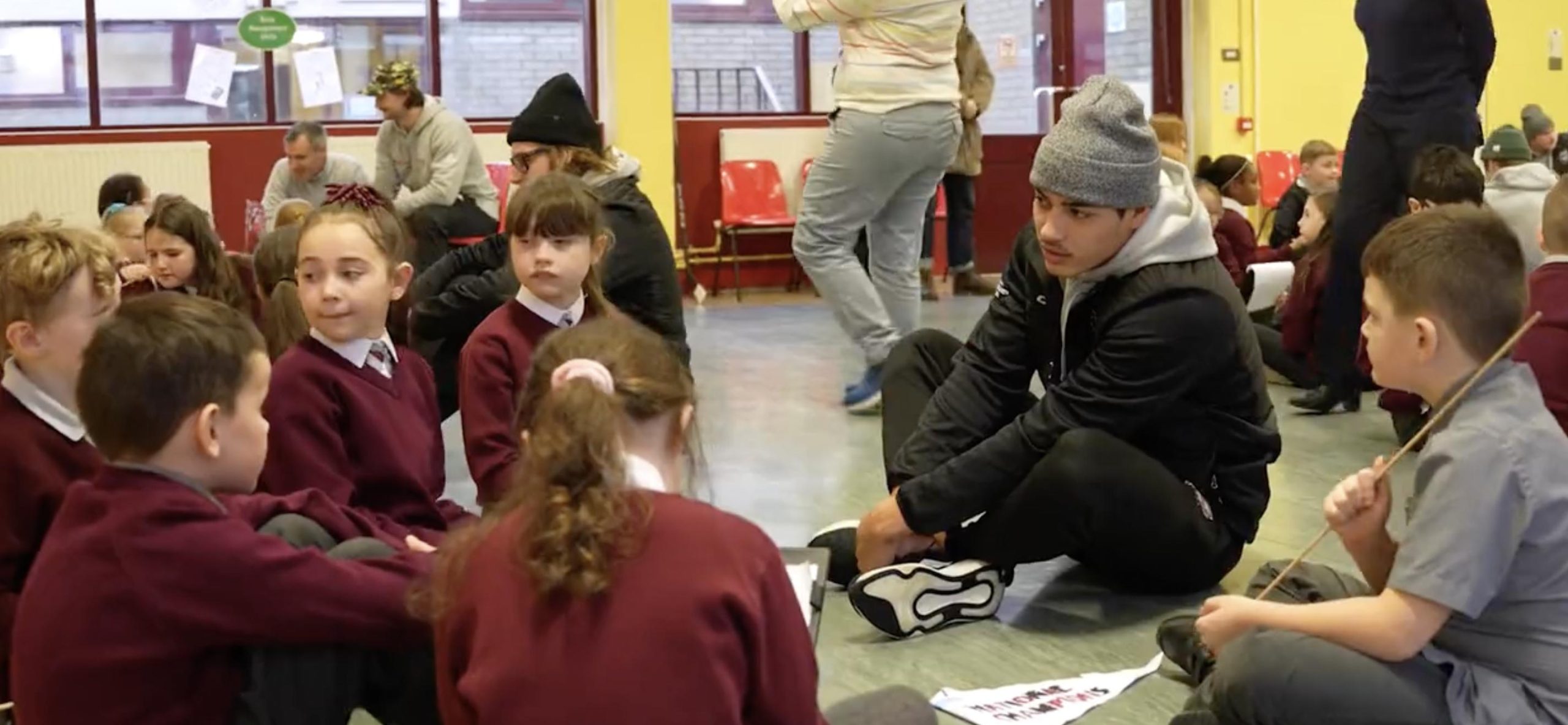
Not every child who attends a school visit will become a lifelong supporter and that shouldn’t be the only measure of success. Giving young people the chance to discover something new has value in its own right.
The Friendship Four’s educational programme shows that introducing people to hockey does not have to begin with a ticket sale.
The foundation is already there. The challenge is ensuring that the interest created around the tournament has somewhere to go afterwards.
We’ll have to wait for the confirmed 2026 details to see exactly how this year’s school and community rollout stacks up against previous tournaments. But if past years have taught us anything, it’s that this off-ice groundwork is just as vital as the tournament itself.
Bringing the campus vibe to Belfast
The atmosphere is another part of the appeal.
Anyone who has attended a Friendship Four weekend will understand that it offers a different experience from a standard EIHL fixture. The hockey itself is the obvious draw, with four top-tier university programmes packed into a relentless four-game, two-day sprint.
But NCAA hockey carries a wider sporting culture with it. University identity, student supporters and campus traditions all contribute to the occasion.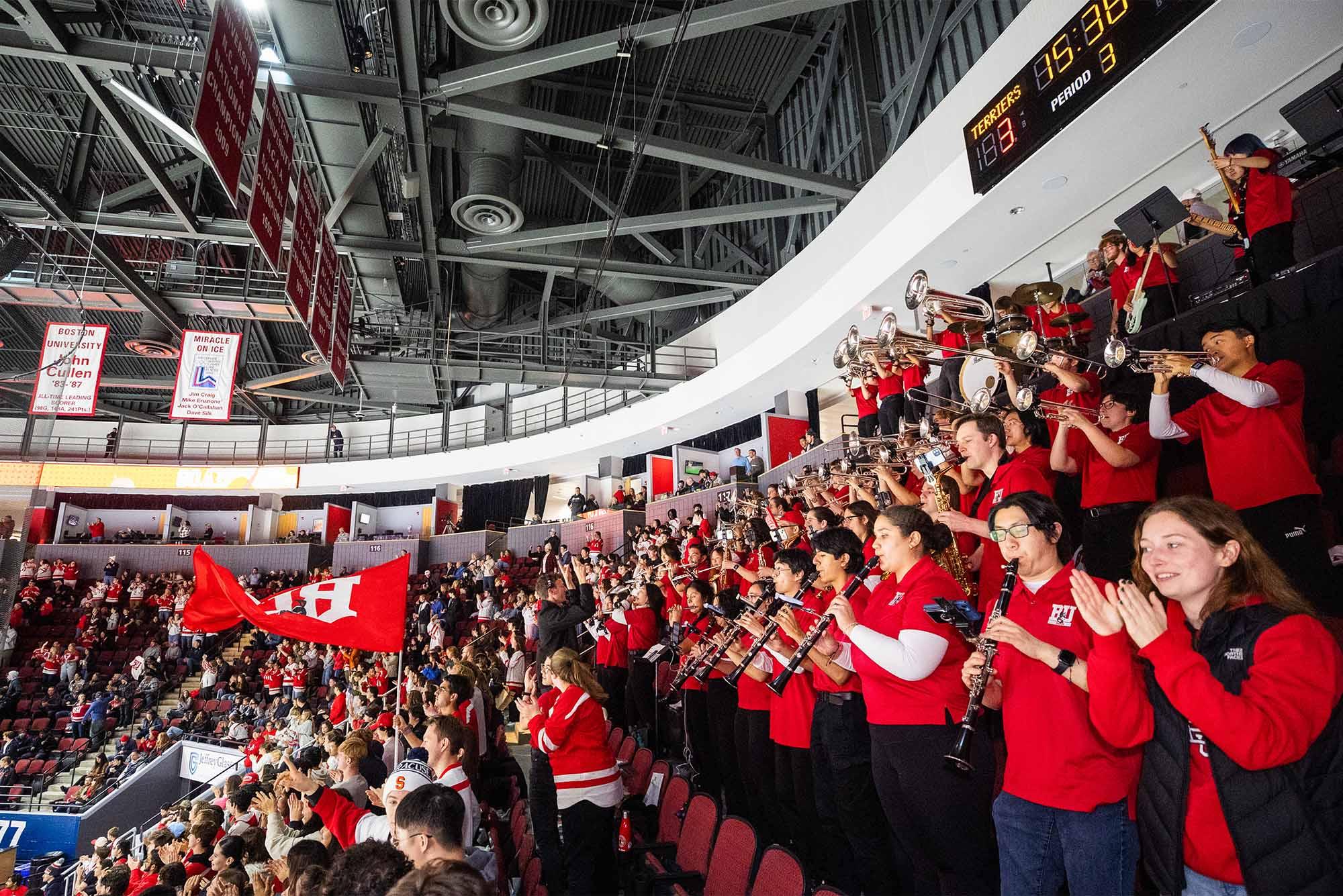
And then there are the bands.
In 2024, Boston University brought its pep band across the Atlantic, with Merrimack also represented by its student musicians. Sacred Heart’s pep band made the journey in 2025.
That is more than a novelty. It offers a glimpse into a sporting culture in which music, university pride and the wider student community are part of the experience.
For regular hockey supporters, that provides something new to enjoy. For someone unfamiliar with the sport, it creates another reason to be curious. You do not need to understand every tactical detail of a college hockey game to appreciate the atmosphere, intensity or connection between a team and its supporters.
The result is an event with several possible entry points. Some fans are there purely for the elite level of play, while others get hooked by the bands, the college pride, and the sheer spectacle of the whole weekend.
More than a weekend of scouting
While the Friendship Four gives local fans a look at a different style of hockey, for EIHL coaching staffs, the weekend doubles as a goldmine for talent scouting.
A November 2024 retrospective by FC Hockey Media reported that 42 players who had appeared in the tournament had gone on to sign for Elite League teams. Belfast Giants led the way with 11 signings, ahead of Nottingham Panthers with nine and Guildford Flames with six.

Some of those journeys have brought players back to Belfast. Darcy Murphy played for Colgate in the inaugural 2015 tournament before returning as a Giant in 2017. Kohei Sato’s route was different: the Giants first watched him playing for the University of New Hampshire at the 2019 Friendship Four, monitored his progress and signed him four years later.
These aren’t just neat trivia points for hockey fans. They prove that the tournament builds a direct, material pipeline across the Atlantic that pays dividends for years.
For supporters, there is another reason to pay attention to the players on the ice. The next prospect who catches the eye in Belfast might eventually become a familiar name in the league they follow every weekend.
Ultimately, the tournament does far more than just fly top-tier NCAA talent into Northern Ireland for a showcase weekend. It actively binds the North American college system to the professional game right here in the UK.
What does success actually look like?
Ticket sales, on-ice intensity, and media buzz are all obvious metrics for success. They’re entirely legitimate things to track but they still don’t tell the full story.
What happens to the child who discovers hockey through a school visit? Is there a clear opportunity to get involved locally?
What happens to the family attending the Friendship Four despite never having watched an EIHL game? Do they find a welcoming route into the wider hockey community?
And can the interest generated by the university teams, international connections and distinctive atmosphere last beyond one weekend in November?
To be clear this isn’t a criticism of what the Friendship Four has built. The tournament’s track record for community outreach and international backing speaks for itself. It’s simply a question of how we take those existing strengths and stretch their impact across the other eleven months of the year.
No single tournament can solve every challenge facing hockey. Clubs, leagues, organisers, governing bodies, supporters and independent media all have a role in making the sport accessible and welcoming.
But when you have an event that successfully welds top-tier sport to real community work, it’s only right to ask how we can connect those dots even better.
Belfast has built something worth protecting
The Friendship Four is a reminder that hockey does not need to look the same everywhere.
It brings together professional supporters, university communities, schoolchildren and people who might never otherwise consider watching an ice hockey game. That variety is one of its strengths.
At Door 14, our goal has always been to look at the bigger picture of UK hockey, which means recognising just how valuable events like this really are. The hockey landscape doesn’t stop at the edges of our domestic league lines, and different corners of the sport have a massive amount to learn from each other.
The Friendship Four isn’t just a flash in the pan that lasts for 48 hours. Over the last eleven years, its community roots and that distinct NCAA vibe have woven themselves directly into the sporting fabric of Belfast.
That’s an achievement worth shouting about. But the real work moving forward is figuring out how to keep that momentum alive ensuring those new faces actually find a permanent home in the sport, and that the wider game capitalises on the doors this tournament opens.
Those questions should not be reserved for tournament organisers. They belong to everyone who cares about the future of the game.
The final word

The Friendship Four returns to Belfast on 27–28 November, bringing four American university teams together to compete for the Belpot Trophy.
We’re guaranteed to see incredible hockey, wild celebrations, and a team lifting a trophy on Saturday night. But we’ll also see a rink packed with a mix of die-hard NCAA fans and locals experiencing the college game for the very first time.
The real value of the event cannot be captured entirely by the final score. It lies in the chance to bring different sporting cultures together and introduce more people to a part of hockey they may not otherwise encounter.
The Friendship Four has shown what can be achieved in Belfast. The challenge now is to build on that success beyond one weekend.
So, as the teams arrive in Belfast, the most important question isn’t about who gets their names engraved on the Belpot Trophy. It’s this
What is the wider UK game actually going to do with the opportunity?
The Friendship Four takes place at The O2 Belfast on Friday 27 and Saturday 28 November 2026. University of Connecticut, Providence College, the University of Minnesota Duluth and Colgate University. See the official Belfast Giants Friendship Four page for event information and ticket details
FROM THE DOOR 14 ARCHIVE
New to the Friendship Four?
If this feature has sparked your interest in college hockey, we took a closer look at the tournament last year.
In our video, 10 Things to Know About the NCAA Friendship Four, we break down the competition and what makes this event different. It’s a useful companion to this year’s feature, whether you’re a long-time hockey fan or discovering the tournament for the first time.
You must be logged in to post a comment.